Basic Aerodynamics
- Description
- Notice
- Reviews
The Aerodynamics module provides an in-depth exploration of the principles governing the behavior of air as it interacts with solid bodies, particularly in the context of engineering applications such as aircraft, vehicles, and wind turbines. This module covers both theoretical foundations and practical applications, equipping students with the knowledge and skills necessary to analyze, design, and optimize aerodynamic systems.
Key Topics Covered:
-
Fundamental Fluid Dynamics:
- Introduction to key concepts such as viscosity, pressure, and density.
- Understanding the Continuity Equation, Bernoulli’s Principle, and the governing equations of fluid flow.
-
Flow Classification and Behavior:
- Differentiating between laminar and turbulent flows, as well as compressible and incompressible flows.
- Exploration of subsonic, transonic, supersonic, and hypersonic regimes.
-
Airfoil Theory:
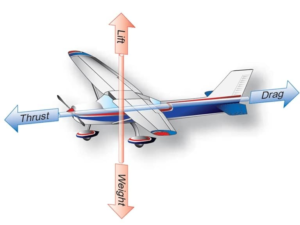
- Study of lift, drag, and the effects of angle of attack.
- Analysis of pressure distribution around airfoils and their impact on aerodynamic performance.
-
Aircraft and Wing Aerodynamics:
- Examination of wing configurations, induced drag, and lift-drag ratio optimization.
- The effects of wingtip vortices and techniques for drag reduction.
-
High-Speed Aerodynamics:
- Understanding shock waves, wave drag, and the implications of compressibility in supersonic flight.
- Application of the area rule for minimizing drag in high-speed designs.
-
Boundary Layer Theory:
- Study of laminar and turbulent boundary layers, flow separation, and stall phenomena.
-
Practical Applications:
- Insights into the aerodynamic design of aircraft, automotive vehicles, and wind turbines.
Practical Component:
Students will gain hands-on experience through wind tunnel testing, Computational Fluid Dynamics (CFD) simulations, and flight testing. Activities include:
- Visualizing flow patterns and measuring aerodynamic forces.
- Simulating fluid flow around various geometries using CFD tools.
- Designing, fabricating, and testing airfoil models to understand real-world aerodynamic performance.
- Investigating high-speed aerodynamics through shock tube experiments and supersonic wind tunnel testing.
Learning Outcomes:
Upon completion of this module, students will be able to:
- Apply the principles of fluid dynamics to analyze and predict aerodynamic behavior.
- Design and optimize airfoils, wings, and other aerodynamic structures for various applications.
- Utilize wind tunnel data and CFD simulations to inform design decisions.
- Address challenges related to high-speed aerodynamics, including shock waves and drag reduction.
What You Will Learn Under This Course.
- Physics of the atmosphere
- Aerodynamics
- Theory of flight
- Flight stability and dynamics
What is the target audience?
-
The target audience for an Aerodynamics module typically includes:
-
Aerospace Engineering Students: Primarily, those pursuing a degree in aerospace engineering, as aerodynamics is a core subject essential for understanding aircraft and spacecraft design.
-
Mechanical Engineering Students: Students focusing on areas such as fluid mechanics, thermodynamics, or automotive engineering, where aerodynamics plays a significant role.
-
Automotive Engineering Students: Those interested in vehicle design, particularly in reducing drag and improving fuel efficiency, would benefit greatly from aerodynamics studies.
-
Aviation Professionals: Pilots, aircraft designers, and maintenance engineers seeking to deepen their understanding of how aerodynamic principles impact flight.
-
Research Scientists: Individuals conducting research in fluid dynamics, wind engineering, or environmental sciences where understanding aerodynamic forces is crucial.
-
Industrial Designers: Professionals involved in designing products that need to consider aerodynamic efficiency, such as sports equipment, drones, or wind turbines.
-
Enthusiasts and Hobbyists: People with a keen interest in aviation, drones, model aircraft, or automotive racing who want to understand the principles governing the behavior of objects in the air.
The module would be designed to cater to varying levels of expertise, from introductory courses for beginners to advanced studies for those specializing in the field.
-
For More Details
Schedule and Cost
Weekly
Evenings Mon to Fri 6-8.30 pm
Ghc1000 per module (2 months)
Weekends,
Saturday 9 to 4 pm; Sunday 2-6 pm
Ghc1000 per module
Types of Programmes
-
Evening and weekend
-
Block release
-
Pre-employment
-
Special requests from formal and informal sectors and short courses for industry/commerce
-
Coursework/project support for those enrolled in tertiary education
LOCATION: Yellow Container, Obom Road - Kasoa - Ghana
Archive
Working hours
| Monday | 6:00 pm - 8.30 pm |
| Tuesday | 6:00 pm - 8.30 pm |
| Wednesday | 6:00 pm - 8.30 pm |
| Thursday | 6:00 pm - 8.30 pm |
| Friday | 6:00 pm - 8.30 pm |
| Saturday | 9:00 am - 4:00 pm |
| Sunday | 2:00 pm - 6:00 pm |
Archive
Working hours
| Monday | 6:00 pm - 8.30 pm |
| Tuesday | 6:00 pm - 8.30 pm |
| Wednesday | 6:00 pm - 8.30 pm |
| Thursday | 6:00 pm - 8.30 pm |
| Friday | 6:00 pm - 8.30 pm |
| Saturday | 9:00 am - 4:00 pm |
| Sunday | 2:00 pm - 6:00 pm |
Archive
Working hours
| Monday | 6:00 pm - 8.30 pm |
| Tuesday | 6:00 pm - 8.30 pm |
| Wednesday | 6:00 pm - 8.30 pm |
| Thursday | 6:00 pm - 8.30 pm |
| Friday | 6:00 pm - 8.30 pm |
| Saturday | 9:00 am - 4:00 pm |
| Sunday | 2:00 pm - 6:00 pm |